
Why choose Ovagenesis for IVF?
At Ovagenesis, we ensure that the IVF process is carried out with safety, consistency, and respect for your individual needs. What we offer at Ovagenesis:
- Personalized treatment plans, tailored to your unique needs.
- Support at every step, with guidance and availability whenever you need it.
- A human-centered approach, with care, respect, and understanding.
- Safety and quality, in accordance with the highest medical standards.
- Advanced fertility technologies, for optimal embryo selection and increased success rates.
- Collaboration with the Institute of Life – IASO, the largest Assisted Reproduction Unit in Greece.


IVF Process at Ovagenesis
IVF progresses through successive stages, each of which plays an important role in the treatment's course. It begins with preparing the endometrium and continues with egg retrieval, fertilization, and finally, embryo transfer. Each step brings the couple closer to their goal of having a child.
-
Monitoring the Woman's Cycle
The process begins with scheduling and monitoring the woman’s menstrual cycle through ultrasounds and blood tests.
-
Hormonal Stimulation
The woman is given hormonal medications to stimulate the ovaries to produce multiple eggs instead of just one.
-
Monitoring Oocyte Development
The development of the oocytes is monitored through ultrasounds and blood tests to determine the appropriate time for egg retrieval.
-
Egg Retrieval
"When the oocytes are ready, egg retrieval is performed, during which they are collected from the woman's ovaries with the help of a needle and ultrasound. The procedure is carried out under mild anesthesia (sedation).
-
Fertilization
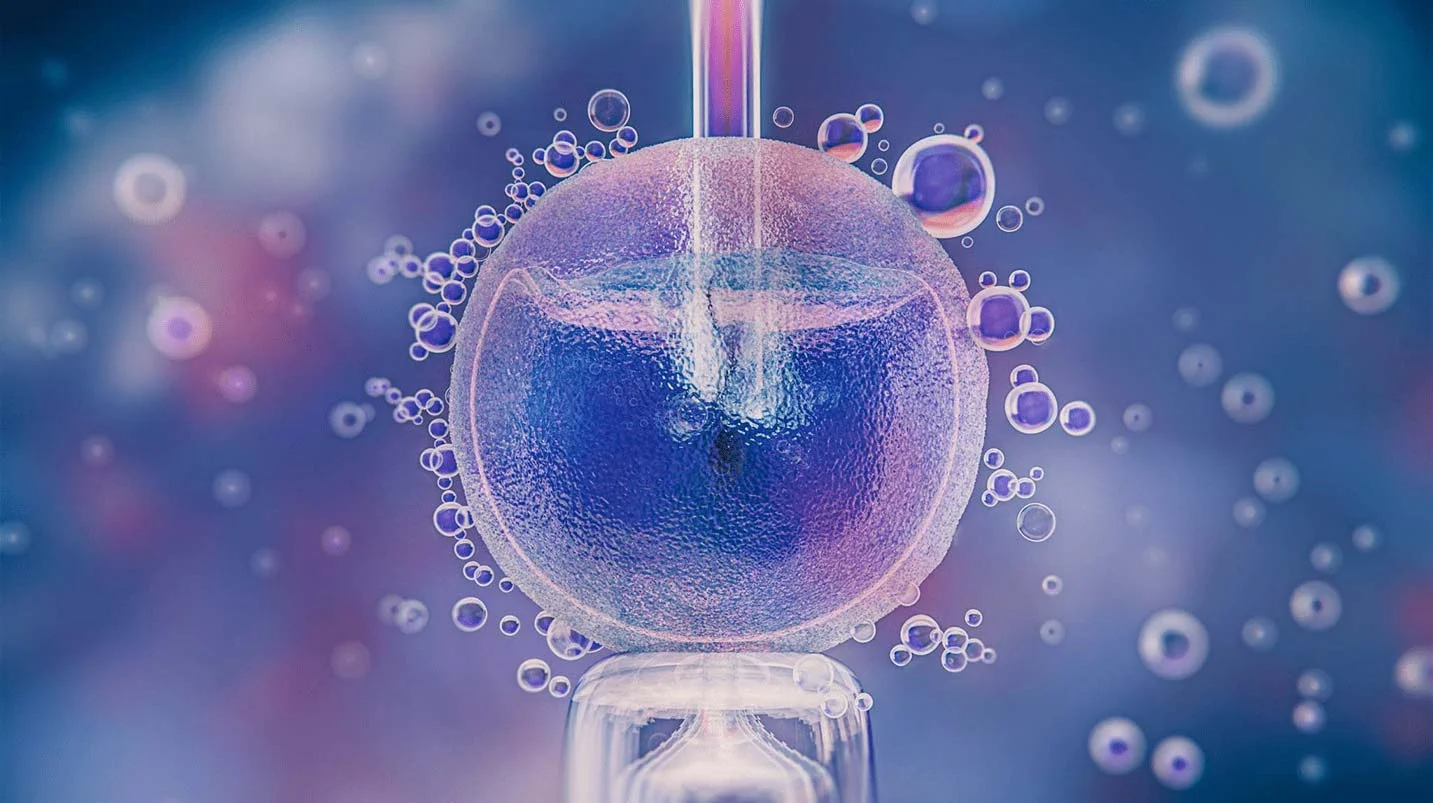
The collected eggs are fertilized with sperm in the embryology laboratory. This can be done either through traditional IVF or through ICSI (intracytoplasmic sperm injection).
-
Embryo Culture
The fertilized eggs are cultured in the laboratory for several days, during which their development is monitored until the best embryos are selected for embryo transfer
-
Embryo Transfer
One or more embryos are transferred to the woman’s uterus with the help of a thin catheter. The procedure is painless and does not require anesthesia.
-
Post-Embryo Transfer Support
After the embryo transfer, the woman receives hormonal support to assist in embryo implantation and pregnancy development.
-
Pregnancy Test
Ten to fourteen days after the embryo transfer, a blood test is performed to determine if pregnancy has been achieved.
IVF Success Rates in Ovagenesis
Success rates with IVF by age group
*Average success rate in 3 embryo transfers
Success rates with IVF in Ovagenesis by age group
*Average success rate in 3 embryo transfers
Send Us a Message
Fill out the form below, and we’ll get back to you as soon as possible.
FREQUENTLY ASKED QUESTIONSAbout IVF
What is in vitro fertilization (IVF)?
In vitro fertilization (IVF) is a modern assisted reproductive technology used to address fertility problems. During this process, eggs and sperm are fertilized in the embryology laboratory, and the embryos created are transferred to the woman’s endometrium through the embryo transfer procedure.
IVF offers hope to couples facing difficulties in conceiving and is an effective solution for cases of infertility. Advances in reproductive medicine in recent years have significantly increased success rates, giving more couples the opportunity to fulfill their dream of having a child.
The process is not only a scientific approach but also a psychological and emotional journey for the couples who choose it, marking a significant step toward building a family for those facing difficulties in conception.
What is the process of IVF?
1. Preparation and monitoring of the woman’s cycle: The process begins with the scheduling and monitoring of the woman’s menstrual cycle through ultrasounds and blood tests.
2. Hormonal stimulation: The woman receives hormonal medications to stimulate the ovaries to produce multiple eggs instead of just one.
3. Monitoring oocyte development: Oocyte development is monitored through ultrasounds and blood tests to determine the right time for egg retrieval.
4. Egg retrieval: When the oocytes are ready, egg retrieval is performed, where eggs are collected from the woman’s ovaries with the help of a needle and ultrasound. The procedure is done under light anaesthesia (sedation).
5. Fertilization: The collected eggs are fertilized with sperm in the embryology laboratory. This can be done through classic IVF or through intracytoplasmic sperm injection (ICSI).
6. Embryo culture: The fertilized eggs are cultured in the laboratory for several days, during which their development is monitored until the best embryos are selected for embryo transfer.
7. Embryo transfer: One or more embryos are transferred to the woman’s endometrium using a thin catheter. The procedure is painless and does not require anaesthesia.
8. Support after embryo transfer: After the embryo transfer, the woman receives hormonal support to help the embryo implant and develop the pregnancy.
9. Pregnancy test: Ten to fourteen days after the embryo transfer, a blood test is conducted to determine if pregnancy has been achieved.
What factors determine the success rate of IVF?
- Age of the woman: Age plays a significant role in the success of the process, with younger women having higher success rates.
- Egg quality: The quality of the eggs is crucial for the success of fertilization.
- Sperm quality: The quality of the sperm affects the success of fertilization.
- Embryo quality: The quality of the embryos created is critical for implantation success and pregnancy development.
- Existing medical conditions: Hormonal disorders or issues with the reproductive system can affect the success of IVF.
What tests should I undergo before IVF?
According to Greek legislation, before undergoing a medically assisted reproduction method, the interested party must undergo tests for human immunodeficiency virus (HIV 1, HIV 2), hepatitis B and C, and syphilis, as per Article 4, Paragraph 2 of Law 3305/2005.
However, a series of further tests is necessary to assess the fertility of the couple before undergoing IVF. The choice of tests depends on the patient’s medical history, age, medical profile, and other parameters considered by the fertility doctor. The doctor proceeds with a personalized plan of tests to ensure that all possible causes of infertility are properly evaluated.
Some of the tests considered important for fertility evaluation include:
- Hormonal tests: The hormones FSH (follicle-stimulating hormone), LH (luteinizing hormone), PRG (progesterone), E2 (estradiol), and TSH (thyroid-stimulating hormone) help evaluate the function of the ovaries and thyroid gland.
- Hysterosalpingography (HSG): Evaluates the permeability of the fallopian tubes and possible blockages, which are important for fertility.
- Semen analysis (spermogram): Evaluates the quality of the male sperm, motility, count, and morphology of the sperm.
- AMH measurement: The AMH hormone test assesses the number of follicles in the ovaries and indicates the ovaries’ ability to produce eggs.
- Tests for infections: Detection of infections that can affect fertility, such as chlamydia or gonorrhea.
- Gynecological examination and ultrasound: Checks for potential anatomical problems or conditions such as fibroids, cysts, or endometriosis.
- Immunological tests: Tests for immune system abnormalities that may affect fertilization or embryo survival.
The selection of tests and interpretation of results is carried out by the fertility doctor and aims to provide the best possible evaluation of fertility parameters to determine the most appropriate treatment plan.
Why should I freeze my embryos?
Embryo cryopreservation (or embryo freezing) is a process that can offer multiple benefits and safeguard fertility in various situations. There are several reasons why someone may choose to freeze their embryos before undergoing IVF or other fertility treatments:
- Safe storage for future use: If there is a need to delay embryo transfer or if the couple desires a “safety net” for future use, cryopreserved embryos can be used at a later time. This option can be useful for couples wishing to have children at a later age or for those facing time constraints.
- Protection of fertility due to medical treatments: For women undergoing cancer treatments or other serious illnesses, embryo cryopreservation may be an option to protect their fertility, as some treatments (e.g., chemotherapy) can negatively affect ovarian function and the ability to produce healthy eggs in the future.
- Reducing the chances of multiple pregnancies: In IVF, more embryos may be created than necessary for transfer. Cryopreservation allows the storage of extra embryos for future use, avoiding the need for multiple IVF cycles or the possibility of multiple pregnancies (twins or triplets).
- Avoiding new treatments in case of failure: If the first IVF attempt is unsuccessful, cryopreserved embryos provide the opportunity for a new attempt without having to start the egg retrieval and fertilization process again. This can reduce costs and emotional strain for the couple.
- Necessary for women with low ovarian reserve: For women of advanced age or with diminished ovarian reserve, embryo cryopreservation can be a strategy to ensure healthy embryos are available for future use, as egg quality declines over time.
- Avoiding delays due to factors affecting the process: In cases where the woman is not ready to complete the IVF process or faces health issues requiring a delay, embryo cryopreservation allows the transfer to be postponed without losing successful embryos.
- Maintaining options for a future family: Cryopreservation allows the woman or couple to preserve their fertility, so they can have children when they choose. Embryo freezing is a strategy to protect and safeguard fertility, providing greater flexibility and options for the future.
How many years can I freeze my embryos?
According to Greek legislation, the duration of embryo cryopreservation is 5 years, with the possibility of extending it for an additional 5 years each time, upon written request to the Assisted Reproductive Unit and provided that the woman has not reached the age of 50. From the age of 50 to 54, special permission from the National Authority for Medically Assisted Reproduction is required for the use of cryopreserved embryos.
What are the chances of multiple pregnancies?
The likelihood of multiple pregnancies (twins or triplets) increases when more than one embryo is transferred during IVF. However, transferring a single embryo (in some cases) may reduce this risk.
Can I choose the sex of my child through IVF?
Sex selection is possible in specific cases, such as for preventive genetic tests (e.g., for sex-linked genetic diseases). However, selecting the sex for non-medical reasons is not allowed.